
Retired sled dogs are a natural part of the farm here, and our sled dogs retire in stages. They run the long tours until about ten years old, rarely longer, then move to the day tours from the farm, and when their bodies say stop, they become pensioners on the farm, walking companions for guests, and keep an eye on the young puppies. Every dog that is born or arrives here stays for life. Most live to about 13, and the oldest reached 16. We do not sell dogs.
Huskyfarm Innset has around 80 to 90 dogs: adults with names and faces on our website, the puppies born in June 2026, and a house dog. They are a mix of Greenland dog and Siberian husky, some with Alaskan husky, bred for expedition work in the mountains between the Dividal and Rohkunborri national parks. On a farm like ours the dogs are not a fleet that gets replaced, but a part of our family. They are a population with every age in it, from the puppies born in June 2026 to the pensioners, and what happens at the end of a dog’s working life is as much a part of the farm as the puppies. This is how it works here, told as plainly as we can.
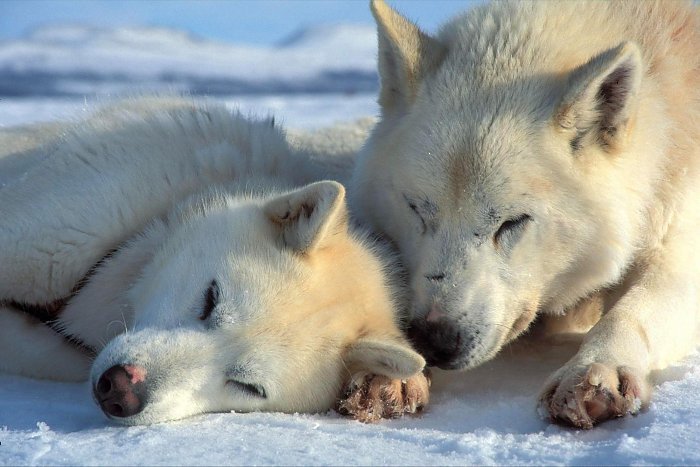
A sled dog’s life in three phases
Puppies and young dogs. Puppies and young dogs are not put in front of a sled or the training cart before they are 15 months old. Pulling too early may increase a young dog’s risk of joint problems later in life, and we want our dogs to have a long and healthy life, so we wait. Until then they come along on walks, meet guests, and learn the farm.
Working years. From 15 months a dog starts training to pull, and from 19 months at the earliest it runs the long tours: from the five tour days of the Husky tour Northern light to the 26 of the Special tour Russian Border, in the mountains with everything the group needs carried along, and the training season before it. Every dog should have at least 500, preferably 800, kilometers of training under its paws before the winter starts. Training comes in three phases: light in summer when it is not too warm, every other day in the fall on an individual program, and in winter all dogs in work with individual load and rest. More than 60 volunteers have helped with the fall training over the years, one or two each season from September to mid-December. In the fall of 2026 five young people from a school project tested a measuring system for pulling force and speed on our dogs for a week. What we want from the project is a system that lets us analyze each dog’s pulling force in relation to speed, terrain, and other conditions. Then we can make adjustments for each dog: its position in the team, or a move to another team, until every dog has the place that suits it best.
Retirement. A dog runs the long tours until about ten years old, rarely longer. After that it needs longer rest between tours, so it moves to the day tours from the farm, which are about three hours with an hour on the sled. When the body says stop, the dog retires from pulling altogether.
How we decide when a dog is done with the long tours
Anne and Morten know every dog from puppyhood and see it in training every fall. In winter every dog is in work with its own load and rest, and an aging dog needs longer rest between tours than the others. When that happens, the dog comes off the long tours and runs the day trips from the farm, where one or two dogs pull a child’s sled and two to four an adult’s, for about an hour on the sled. When even that is too much, the dog stops pulling. The rule of thumb is ten years for the long tours, rarely longer, and never eleven.
What a retired sled dog does all day
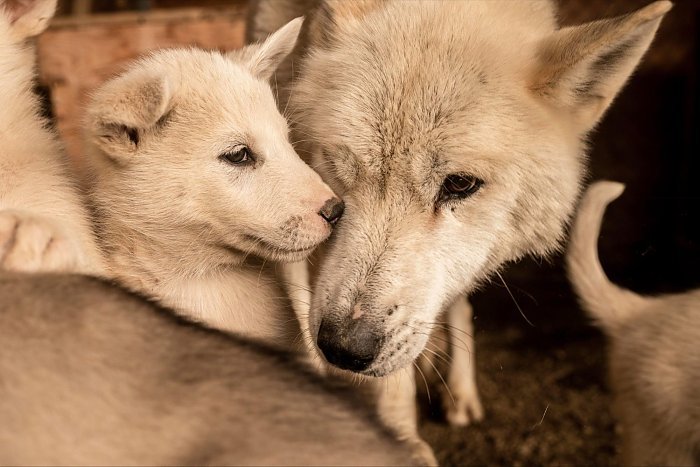
A pensioner on the farm gets other tasks, as our own description of the dogs puts it: for example looking after and educating the puppies. Puppies and young dogs live in the yards together with older dogs, because the hierarchy matters to them. They go for walks and short hikes with guests, which they are always pleased about. Some of the older dogs live outside the dog yards, because the bustle of a big yard is stressful for an old dog and quiet suits them better.
Since 2025 the farm has what we call the dog hotel, a building for dogs that need to be indoors because of injury or age. It is the latest of the buildings put up here since 1988, after the guesthouse, the bakery with its stone oven, the restaurant, and the nine dog yards, and it is there so that an old or injured dog can be warm and looked after through the winter without being parted from the farm.
Guests on the farm meet the pensioners daily, and guests on the expeditions meet them on the farm before and after the tour.
How long sled dogs live
Our dogs usually live to about 13. The oldest reached 16. These are robust dogs with thick winter coats, used to pulling heavy sleds in rough terrain. The long tours end at about ten years; the day trips end when the body says stop. After that, the dog is a dog on a farm, with people around it every day. More about the dogs, their characters, and their ages on our dogs.
Why they stay
Every dog on the farm stays for life. We do not sell dogs and we do not move old dogs on. That is a decision made long ago, and it shapes everything else: the number of dogs we keep, the size of the yards, the dog hotel, and what feeding around 80 to 90 dogs costs year round, which is our largest cost after wages. It also shapes what guests see. The dogs here are not guard dogs and have nothing to defend, so every one of them, old or young, greets anyone who comes near.
If you want to meet them, the easiest ways are a Huskyfarm Vacation on the farm or a few days before or after a multi-day tour. Walking an old dog up the valley is part of what people remember from a stay here.
What this costs, and why we do it anyway
Keeping a dog for 13 or 16 years when it works for eight or nine is a cost. Food for around 80 to 90 dogs is our largest expense after wages, and the pensioners are part of that number. The nine dog yards, the dog hotel, and the time we spend on dogs that no longer pull are all part of the price of a tour with us. It is part of what a tour with us costs, and we would rather explain it than hide it. We think a guest who has driven a team of six dogs on an expedition through the Dividal mountains would want to know those dogs will still be here, older and slower, the next time they come. Many of our guests do come back, and they ask about their dogs. Some have their team from last time written on a piece of paper in their pocket, or saved on their phone. They want to say hello, or, if the dogs are still running, drive the same dogs on the next tour.
Frequently asked questions about retired sled dogs
At what age do sled dogs retire?
Our dogs run the long tours until about ten years old, rarely longer. Then they do the shorter day tours from the farm, and when that becomes too much, they retire from pulling.
What do retired sled dogs do?
They get other tasks, such as looking after and educating the puppies, they go for walks and hikes with guests, and they live quietly on the farm. Some of the oldest live outside the dog yards.
Do you sell or rehome old sled dogs?
No. Every dog stays with us for life.
How long do your sled dogs live?
Usually to about 13. The oldest reached 16.
Where do old or injured dogs stay in winter?
Since 2025 in the dog hotel, a building for dogs that need to be indoors because of age or injury.
Can I meet the old dogs as a guest?
Yes. On a farm stay you meet them every day, and taking one for a walk is part of the stay. On the expeditions you meet them before and after the tour.
Can I help with the dogs?
We take one or two volunteers for the fall training from September to mid-December each year. Details on volunteers wanted.
The next step
The dogs are presented one by one, with name, age, and sex, on our dogs. If you want to spend time with them, look at a winter vacation on the farm, or write to info@huskyfarm-innset.no and ask about the pensioners. Someone here will know every one of them by name.
 Facebook